
UK sporting events must be ready for a changing climate


The Government wants the UK to remain a world leader in hosting major sporting events. But the climate these events take place in is changing - and our sporting infrastructure must adapt with it.
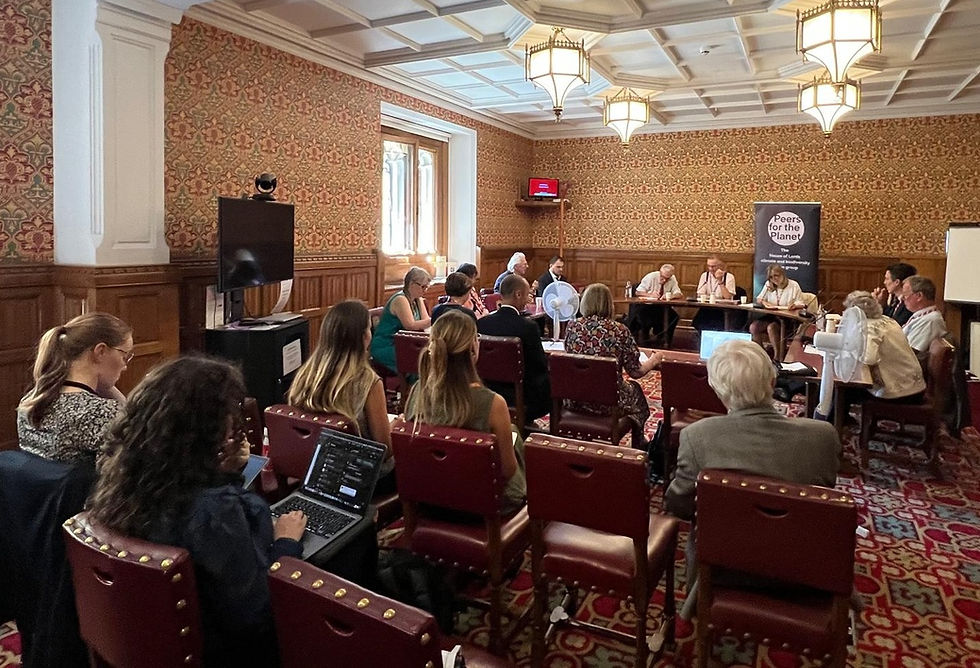
This week, Peers have been scrutinising the Sporting Events Bill, a major piece of legislation designed to strengthen the UK’s ability to host world-class competitions.
Yet the Bill, and the information published so far about the Government’s forthcoming proposed Major Events Strategy, make no mention of sustainability or climate resilience.
Peers have tabled amendments to address this gap and ensure that UK sport can meet the demands of a changing climate.
The need to adapt
One amendment, proposed by P4P Director Lord Whitty, would require UK Sport and Sport England to report on the impacts of climate change on sport and sporting venues, and show how they will adapt and cope.
This is not a theoretical risk. The Climate Change Committee’s latest Adaptation Report highlights the need for greater scrutiny of climate risks to cultural assets, including sport. Yet neither UK Sport nor Sport England currently sits within Defra’s five-yearly adaptation reporting cycle - a process already followed by many other parts of the economy.
Adaptation matters at every level of sport, not just the biggest events. Research commissioned by DCMS found that extreme weather already costs grassroots sport around £320 million a year. That cost could rise by a further £95 million under 2°C of warming and £190 million under 4°C of warming.
The need for sustainability and resilience
Peers have also proposed that future major events and strategies should consider sustainability and climate resilience, including energy and water efficiency, transport impacts, and whether new infrastructure is fit for the climate of the future.
Transport is one of the biggest challenges. At Birmingham 2022, spectator travel accounted for 52% of the event’s carbon footprint; at EURO 2024, it was nearly 80%. Yet under the Bill’s transport provisions, bodies such as Active Travel England and the rail network operator may be consulted on transport plans, but there is no requirement for sustainable travel to be prioritised.
Other sporting bodies have already recognised this direction of travel. Sustainable transport is a condition of hosting for FIFA, while environmental reporting has become routine at major events including London 2012, Birmingham 2022, EURO 2024 and Paris 2024.
Requiring climate and sustainability considerations in this Bill would not be exceptional, it would simply bring UK sporting events into line with where the sector is already heading.
P4P Peers will continue to press for changes to ensure that major sporting events deliver not only moments of national pride, but a lasting legacy that is resilient to a changing climate.
Report Stage will take place in the House of Lords on the 15th July 2026 – stay tuned for further updates…
“In two years we will be in the middle of the 2028 Euros. There is every likelihood that we will be facing roughly the same or, worse, higher temperatures than those this week. If we fail to take action now, there is every possibility that we will look back and wish we had done something while we still had the chance. These amendments make a start on doing that. I appreciate that those bodies and others are already looking at it on a voluntary basis, but it is important that this is built into our whole strategy in relation to climate change and that we have some leadership on this issue”. Lord Whitty
“On Amendment 87, on sustainability reporting, we hear the same language every time a major sporting event is bid for, such as world-leading sustainability, greenest games ever and low-carbon legacy, and it all sounds incredibly impressive at the time… We should not be relying on glossy bid documents and press releases to tell us whether promises have been kept… This amendment says that, if you make environmental commitments before the event, you report on them afterwards—accurately, obviously—so that we can see what was delivered and was not”. Baroness Jones of Moulsecoomb
“I thank the noble Baroness, Lady Jones of Moulsecoomb, the noble Lord, Lord Harlech, and my noble friend Lord Whitty for their amendments. As highlighted by the noble Lord, Lord Moynihan, there was clearly considerable consensus during the debate… This Government fully agree that environmental sustainability should be, and is, at the heart of planning and delivering the major sporting events that we host, not least—as the noble Baroness, Lady Jones, pointed out—as we experience the extreme heat of this week. I, for one, am delighted to be in your Lordships’ Committee this afternoon, rather than outside in the extreme temperatures”. Baroness Twycross, DCMS Minister

Comments